Thursday, 5 October 2017

Tuesday, 3 October 2017
Monday, 2 October 2017
Thriller Iconography
What is Iconography?
Iconography is the symbolism, props and images appearing as conventional by reoccurring in a movie genre multiple times. These are then associated with the genre.
Thriller movies intend to play on common fears, usually caused by iconography, explaining why the majority of thrillers are successful.

Iconography is the symbolism, props and images appearing as conventional by reoccurring in a movie genre multiple times. These are then associated with the genre.
Thriller movies intend to play on common fears, usually caused by iconography, explaining why the majority of thrillers are successful.

Some iconography associated with thrillers: (Examples mentioned are in video format below)
- Weapons such as guns or knives to kill. (PSYCHO SHOWER SCENE)
- Money which is often earnt through an illegal deed or theft during murder.(GHOST)
- Blood and gore by death.
- Shadows to mask the identity of killers amongst the darkness, this triggers a viewers anxieties, as many are frightened of the darkness and what lies within it.
- Masks to hide identity during a torturous murder. (HUSH)
- Being framed at night rather than day as this allows hiding, shadows and darkness.
- Confined Space to make the audience feel trapped. This tends to scare a large percentage of the audience as many are claustrophobic, being successful as thrillers are made to thrill and trigger anxieties.
- Green screen lenses and CGI effects to appear to be in darkness yet allow the viewer to still see the visuals.
- Isolated Locations such as woods or derelict towns, as this is far from escape routes and there is no help by other people. (HOUSE OF WAX)
- Water or lakes usually one victim drowns or uses this to try and escape.
Blurbs
Blurbs
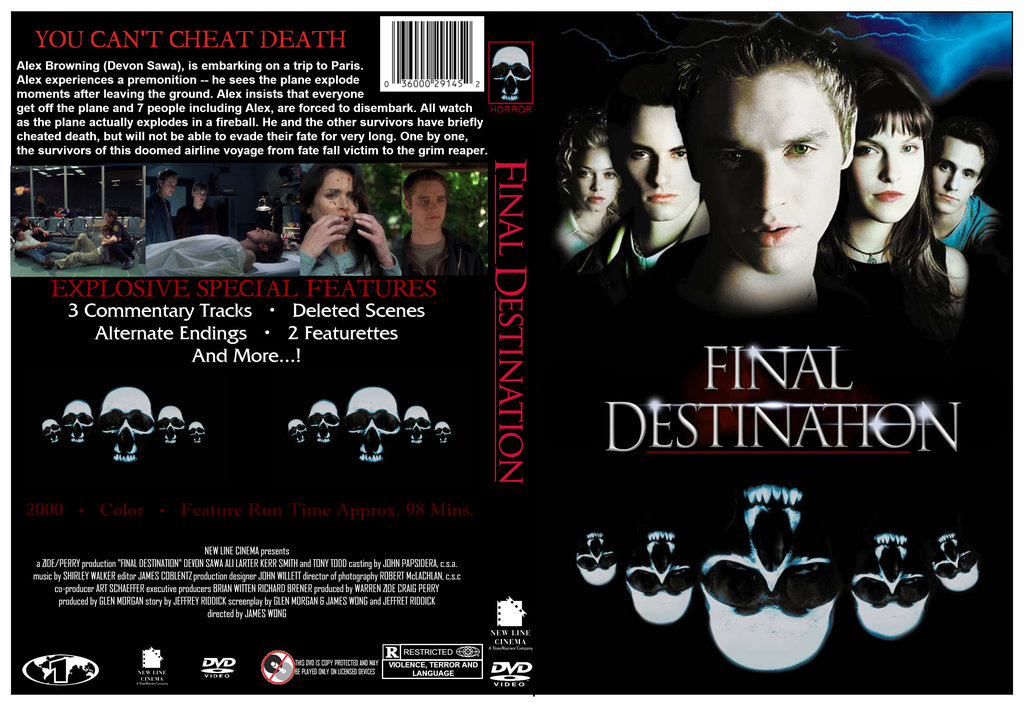
A blurb is a short description of a book, film, or other product which is written for promotional purposes. An effective blurb has to be engaging so that it persuades the audience to go and watch the film. Blurbs allow the audience to have a brief understanding as to what the film is about, without the whole storyline being revealed.
Aspects of a blurb:
- Introduce the main character.
- Establish the basic situation.
- Identify the setting (which is usually isolated).
- Hint at mysterious secrets, spells, or incidents.
- Identify high stake (such as protecting innocent children or saving one’s own life, sanity, or reputation).
- Give the protagonist a goal (often related to the story’s stakes).
- Suggest that the antagonist is formidable, powerful, ancient, and possibly supernatural.
An example of a thriller film blurb would be 'Final Destination' (Dir. James Wong, 2000).
Crime Thriller Research; Sound and Music
Conventional Sounds and Music within thrillers
Within thriller films multiple contrasting sounds are represented to create a sense of mood and atmosphere to draw the viewers in to create a thriller response to the movie. Sounds and music is a vital element to use within the production stage of making a film as it develops an understanding of context to describe the narrative of the film as well as creating tension and suspense. The purpose of these conventional sounds within thrillers aim to excite the audience however, it reveals a sense of the characters emotions within the film. Sounds and music that it co-operated into the movies create ideas to link with the particular sequence furthermore, it symbolises different paralinguistic features and other types of movements the protagonist and antagonist will provide the audience with. There are different types of sounds used within media productions in order to make it more effective these include:
- non - diegetic music which is sound that the characters cannot hear and is not part of the imaginary world of the story. Therefore, this will normally include a voiceover or a soundtrack.
- diegetic sound which can be heard by the characters within a scene/sound part of the imaginary world.
- parallel sounds which are used to match a specific scene for example, a terrifying scene would include music that is mysterious and scary to involve the audience and create tension.
- on and off screen sound depends on whatever the source is within the frame or outside the frame.
Thriller films use non diegetic sounds and music to create a sound bridge or to create a certain atmosphere. A sound bridge can lead in or out of a scene. They can occur at the beginning of the scene when the sound from a previous sequence carries on briefly before it fades out for the new sound to be played as the new scene begins. There are a wide variety of diegetic sounds which are conventional in the genre of thrillers, these include narrator's commentary, sound effects which are added for the dramatic effect, and music to create a sense of mood and atmosphere to juxtapose with the film.
Example of diegetic sound:
Example of non-diegetic sound:
Parallel sound:
Crime thriller films use many conventions to create a terrifying however, effective and tense atmosphere to draw the audience in. A specific convention in which thrillers use is silence as it creates suspense and gets the audience on the edge of their seats feeling frightened. Whilst, this occurs it evokes certain feelings and emotions and focuses upon what is going to happen during the film. Music within any thriller film is particular used to understand and clarify to the audience a part of the film which is significant. The music reflected begins at a slow pace as it builds up tension however, as something occurs the music engages the audience as it gradually speeds up to reflect the narrative and suggest something horrific is about to happen as it reaches the climax of the film. An example of sound to create a frightening experience to the audience is Don't Breathe directed by Fede Alvarez during 2016. The narrative within the film portrays three criminal thieves breaking into a blind mans house in hope to capture a fortune although, they become trapped as the protagonist (the blind man) isn't as helpless as he seems.
IMDb link to reflect information of the film
Crime thriller films use many conventions to create a terrifying however, effective and tense atmosphere to draw the audience in. A specific convention in which thrillers use is silence as it creates suspense and gets the audience on the edge of their seats feeling frightened. Whilst, this occurs it evokes certain feelings and emotions and focuses upon what is going to happen during the film. Music within any thriller film is particular used to understand and clarify to the audience a part of the film which is significant. The music reflected begins at a slow pace as it builds up tension however, as something occurs the music engages the audience as it gradually speeds up to reflect the narrative and suggest something horrific is about to happen as it reaches the climax of the film. An example of sound to create a frightening experience to the audience is Don't Breathe directed by Fede Alvarez during 2016. The narrative within the film portrays three criminal thieves breaking into a blind mans house in hope to capture a fortune although, they become trapped as the protagonist (the blind man) isn't as helpless as he seems.
IMDb link to reflect information of the film
Conventional Characters to the genre of thriller/crime
Click the links below to view the summary of the IMDB page
· Gangsters/ crime related individuals - Public Enemies 'John Dillinger' (Dir.Michael Man, 2009).

· Psychotic characters trying to murder loved ones - The Shining ‘Jack Torrance’ (Dir. Stanley Kubrick, 1980).

· Authority (police) in the mercy of the antagonist – Last shift 'Jessica Loran' (Dir. Anthony DiBlasi , 2014).

· Characters possessing robbery - The dark knight 'The Joker' (Dir. Christopher Nolan, 2008).

· Assassins/spies - Red sparrow ‘Dominika Egorova’ (Dir. Francis Lawrence, 2018).


· Seductive/attractive women - Red sparrow ‘Dominika Egorova’ (Dir. Francis Lawrence, 2018).

· Manipulative characters – ‘Hannibal Lector’ The Silence of The Lambs (Dir. Johnathan Demme, 1991).

Crime Thriller Research: Characters and Iconography
Iconography in Crime Thriller


Iconography in thriller films include:
- Guns
- Knives
- Money
- Blood
- Shadows
- Fast Cars
- Crime Scene Tape
- Confined Spaces
- Dark Clothing
- Wood Location
- Running water
- Street Lights
- Bars on Windows
- Police or Investigators

Silhouettes and shadows are what give a thriller the enigma and mystery for the audience. Shadows are a common piece of iconography associated with the thriller genre because they build up fear in the audience, by instigating that the protagonist is being watch by a human being or some kind of animal or monster. The protagonist is often oblivious to this but can often sense that something isn't right, which leads them on their journey. They often induce thoughts of fear and darkness for the audience as well as giving them clues and they ask questions out of suspense. A character with a silhouette is most likely to be the antagonist, which usually isn't revealed until the end of the film. An example of a shadow used in a thriller film on the antagonist would be 'It' (Dir. Andy Muschietti, 2017).

The use of confined spaces in a thriller also makes the audience feels as though they are too trapped. Being in a confined space often leads the protagonist to start breathing heavily and panting to inform how they are trapped and cannot escape, or it often leads to the start of their struggle as they try to break free. 3% of the population are claustrophobic, so to use this as a way to terrorise the audience is particularly effective. An example of a thriller film which has a iconographic confined space would be 'Kill Bill 2' (Dir. Quentin Tarantino, 2004).

Woods are locations often used for thrillers. This is because they create a sense of being lost as the characters find themselves trying to figure out how to escape. Woods are often isolated too, which creates a sense of vulnerability and it seems inevitable that the characters will ever find any help. There may be one house in the woods which often turns out to be the antagonist. An example of a thriller film which uses the woods is 'Cabin in The Woods' (Dir. Drew Goddard, 2012).
Running water is often a symbol of death as it suggests the draining of
life or it is often associated with blood dripping and suggests that
the characters are in danger. Running water can represent the draining of life and can keep the audience on edge as to use something as ordinary as running water and to put it into an environment where it is made sinister, it breaks the boundary of comfort for the audience. A few examples of thriller films which use running water include:
- Psycho (Dir. Alfred Hitchcock, 1960).
- Buried (Dir. Rodrigo Cortez, 2010).
- Phone Booth (Dir. Joel Schumacher, 2002).
- Nosferatu (Dir. F.W Murnau, 1922).
- The Sixth Sense (Dir. M. Night Shyamalan, 1999).


Street lights at night are often used in thrillers and at are an effective part of mise-en-scene to keep the emphasis and focus on the protagonist and the fact that there is almost complete darkness surrounding them, apart from the spotlight from the lamp. This further accentuates the fact that the protagonist is alone in the dark and creates fear for the audience as they do not know what might be underlying in the darkness and therefore a tense atmosphere is created. Furthermore, the fact that there is plainly a spotlight on the protagonist could show isolation which is particularly effective the audience as it could engage them too, making them also feel alone as there isn't much else more to focus on.

Bars on windows are used to show imprisonment and isolation, which links to the conventional thriller. Having the blockade of freedom for a character creates the sense of imprisonment and entrapment, not just for the character but for the audience also. The audience becomes so engaged with the character in regards to sympathy that they start to empathise with the character and then begin to feel what they feel. Fences consisting of razor barbed wire also suggest that the characters are imprisoned and have no way of getting out which shows how they are detached from the outside world and therefore conforms to the convention of isolation in thrillers.


Characters in Thriller Films
Protagonist and antagonist are the archetypal characters always present in a thriller film. The protagonist is often a brave male who
seeks to restore the equilibrium and be the hero. The protagonist is the central character who is the focal point of a story who is forced to get involved in a struggle with the antagonist who opposes him. The protagonist has the sympathy of the audience who want to see or learn about his victory over the antagonist. The protagonist is usually a human being whereas antagonist can also be a circumstance, natural calamity, or even an animal force. Mostly the antagonist is the villain who places obstacles in the path of the protagonist and will sometimes have a hidden identity
that the audience will uncover as the film
progresses. Conventionally, the antagonist goes out
for revenge from a past event involving the protagonist.
 Common characters used in thriller films:
An example of a conventional character of the
thriller genre is Ester from the film 'Orphan' (Dir. Jaume Collet-Serra,
2009). The film has a sub-genre of mystery which is yet again
conventional to have in a thriller genre. Throughout the film the
audience sees a seemingly
angelic orphan named Esther. However, she exhibits an unforeseen
devilish streak shortly after arriving at her new home. Once she's
welcomed into a new family home, she begins to display some deeply
unsettling behaviour and shows that she is pure evil.
 Common characters used in thriller films:
- Convicts/criminals/prison inmates/escaped convicts
- Stalkers
- Assassins
- Innocent victims
- Characters with dark pasts
- Psychotic individuals
- Police/detectives
- Terrorists
- Fugitives
- People involved in twisted relationships
- Children
- Menaced women
- Vicars
- People who are trying to escape

Some other conventional characters in the thriller genre include:

- Prison inmates - 'The Green Mile' (Dir. Frank Darabont, 1999).

- Psychotic Individuals - 'The Shining' (Dir. Stanley Kubrick, 1980).
- People taking or dealing drugs - 'Trainspotting' (Dir. Danny Boyle, 1996).


- Assassins - 'JFK' (Dir. Oliver Stone, 1991).
- People in twisted relationships - 'Gone Girl' (Dir. David Fincher, 2014).

- Stalkers - 'One Hour Photo' (Dir. Mark Romanek, 2002).
- Sexy women - 'Black Swan' (Dir. Darren Aronofsky, 2010).

- Characters with dark pasts - 'The Silence of The Lambs' (Dir. Johnathan Demme, 1991).

- Menaced women - 'I spit on your grave' (Dir. Steven R. Monroe, 2010).


Subscribe to:
Posts (Atom)